Time, effort, research, and staring at a blank page, all of these are part of the writing process.
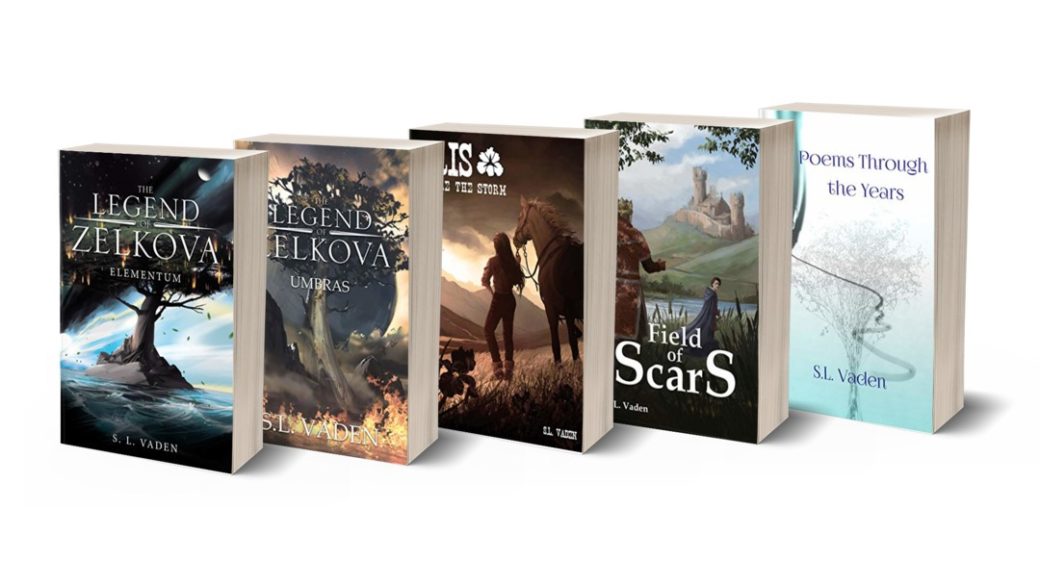
When I started writing my first book, The Legend of Zelkova: Elementum, I didn’t know what I was doing.
All I knew was that I was having fun.
But as time went on and I wrote more books and articles, I began to see what all went into it. It’s more than just words; yes, that is the base of it, but the planning and endless hours of thinking about the plot and characters can make for sleepless nights.
This is where writing notes and making outlines help. If you have an idea, write it down, no matter where you are, what you’re doing, or what time it is. Because once the idea is lost, it’s gone for good.
So, keep a notebook handy or an app on your phone. Even if you might think the idea isn’t worth writing down, do it anyway. There’s no telling what other ideas might stem from it.
Write down the major points of the plot, an idea for the beginning, middle and end. Keep in mind these might change as you write and the story takes form, that’s alright. Sticking too much to an outline can hinder creative flow.
Once you write those down, make an outline of your characters and how they fit in the story and their connection to other characters. Again, this could change as you write.
Side note: Never be afraid to write outside of what you have outlined. Let the story flow and your ideas run.
What message do you have interwoven within your plot?
Mine tend to be about nature and how to respect it before we lose it forever. Another is to go against racism and sexism. I do this by including many different characters, not giving them the stereotypes, they might label as in the world we live. I want the reader to see the world through my books, which have different cultures and peoples. To see that everyone is unique, and that’s a good thing.
When describing different characters.
There was one book I tried to read. But couldn’t get past the first two chapters. Mainly because of how the women in the book were detailed. They described their looks and how their bodies moved, unlike the men in this book, where their personality defined them. I understand this can be part of the character, but keep in mind how readers will see what you write and how they might take it. Always keep your target audience in mind.
Have I lost you yet?
With each character, you can make as detailed notes as you want or as little. For my first book, I didn’t know how Carya would look until the end, making me have to go back and add her details. My character’s personalities form more than what they look like. That comes as I write.
How do I come up with names?
Everyone has their own way of coming up with names. I research names that fit the personality of my characters. With the Legend of Zelkova, they usually come from nature and different languages. Take Kasai, in my first book, and it’s the Japanese word for fire. Or Jardin, the French word for garden. Why do I do this? Mostly because I want to bring other languages to the mind of the reader. To show that the world we live in is vast and has many languages. I also like to use Latin and many others. Find what fits you and your story, this may take time, but you’ll find it.
Here comes the fun part (I mean that with all the sarcasm I can muster.), what I call the in-between story. It’s not the main story that moves the plot along. It’s the filler, the side stories. For me, these are the most challenging parts to write because I want to get to the main plot, where the action is. But the side stories are just as important as the main ones.
I’ve found through experience that the side story can weigh down the book, making it stall out or lag. So, as you write your book, keep in mind there can be too much of the “in-between” story. Just enough to cover the story of the side characters and to keep the story moving along.
During the writing process, you will hit lulls, and they can be long or short. These can be hard to get through. What helps is finding what inspires you. For me, that’s nature and music. So, I take walks, and hike, go to the park. Find new music to listen to, or relisten to my old favourites. Find what helps you and do that.
I’ve read a lot of people asking how many chapters a book should be. If you are looking to be published the traditional way, you want to focus on word count. That’s what the publishing companies ask for. How many words is your book?
1. What should my book word count be?
The following are average word-count ranges by genre.
General Fiction
• Flash Fiction: 300–1500 words
• Short Story: 1500–30,000 words
• Novellas: 30,000–50,000 words
• Novels: 50,000–110,000 words
Fiction Genres
• Mainstream Romance: 70,000–100,000 words
• Subgenre Romance: 40,000–100,000 words
• Science Fiction / Fantasy: 90,000–120,000 (and sometimes 150,000) words
• Historical Fiction: 80,000–100,000
• Thrillers / Horror / Mysteries / Crime: 70,000–90,000 words
• Young Adult: 50,000–80,000
Children’s Books
• Picture Books: 300–800 words
• Early Readers: 200–3500 words
• Chapter Books: 4000–10,000 words
• Middle Grade: 25,000–40,000 words
Nonfiction
• Standard Nonfiction (Business, Political Science, Psychology, History, etc.): 70,000–80,000 words
• Memoir: 80,000–100,000 words
• Biography: 80,000–200,000 words
• How-to / Self-Help: 40,000–50,000 words
All of these are average book word count ranges and should not be taken as the definitive word count you must reach in your book. We all know of outliers within each genre that have been published well under, or well over, these word counts.
With the info above, you can set your word count depending on what genre your book is.
When to end a chapter.
This can be hard for many writers, knowing when to end a chapter. And many tend to end it with the word count in mind. Some like to keep each one around 2,000 words or 800. For me, I try to keep in the range of what I just listed. But I also keep the story in mind. I like to end chapters on scene change, a cliffhanger, or a suspenseful scene. This keeps the reading wanting more. Of course, keeping a uniformed look with your chapter length will make your book look cleaner and well put together. But think of what will get the reader to turn to the next chapter.
Thinking of more than one book at a time.
This can happen when you have more than one book in your series. While writing the first one, you need to keep in mind the next one and even the one after that. You have to look into the future of your story and where you want it to go. To make sure they all connect. Many writers write their series all at once, but others like myself write them one at a time, publish them and write the next one. Either way, you have to think about the future. Keep your stories connected.
How to end your book.
Depending on how many books are in your series, you may want to end with a cliffhanger, keep the readers wanting to read the next one. Or end it happily and make something happen in the next one. The ending is up to you and where you want your story to end and the next one (if there is a next one) to begin.
Editing.
Oh, the torture of editing. Before you start, there are a few things to keep in mind.
When you’re rereading or editing your manuscript and want to delete something. Open up a new doc and transfer it there. Don’t get rid of it completely because the idea could be used in another story and might be forgotten if you don’t have a copy of it somewhere.
Keep more than one copy of your work on two different devices. Never have all your eggs in one basket. If your computer or flash drive breaks, you want another copy of your hard work.
Back to it, editing can be a challenging process. No matter how many times you read it, there will always be something that is overlooked. This happens because we made the story, and it’s hard to see flaws in what we make, no matter how much we look at it. And this is okay. It happens to even the best of writers, including best sellers.
If you’re not seeking a publisher or publishing it yourself because you think it’s not good or needs to be edited more. Keep in mind this process can go on forever as long as you draw it out. Editing has to end at some point. Over editing can happen when you think about it too much.
Get someone you trust or an editor to look over it for you. Two pairs of eyes are better than one. I’m not saying to not edit but don’t over-edit. Keep all this in mind when you spend long hours wanting to scream in frustration. ‘Tis, the life of a writer.
You may ask, do I need an editor. I would suggest always get someone else to look it over at least once before you look over it one last time before sending it out. I had three different eyes on one book and still missed something. It happens. It’s all apart of being a writer. Don’t get discouraged. You will make it through this phase, just don’t overthink it.
Do I need beta readers?
That all depends on you. Finding beta readers can be easy for some, harder for others. They are good to have, but you don’t “have to have” them. I would much rather have an editor. But that’s just me.
Now that you’ve got your story going and have stared at your screen, blank or not. You are on your way. One word after the other, ideas flowing and lulls accruing. End the end, making a story, bringing characters to life can be very fulfilling. And most wouldn’t trade it for the world.
No matter how far you are in your writing, keep going. There will be times where you feel like it’s not worth it, and you should stop. Don’t listen to those voices. Don’t listen to the naysayers. Only you can write the book the way you are writing it.
Because you are unique, and so is your story. Be proud of what you have done and what you are going to do. Because writing a book is no easy task. It takes lots of hard work, long hours, and dedication. It may look easy on the outside, but it’s one of the hardest things anyone can do.
I believe in you and the story you are writing.
If you have any questions, feel free to comment below or find me on social media. Thanks for reading.
1. https://thewritelife.com/how-many-words-in-a-novel/