Author: S.L. Vaden

  • This may be uncomfortable…

    Loss can be a hard and painful thing to talk about, not only for the person going through it, but also for the people listening.

    Take my most recent experience. I broke my ankle. When I told a few friends, some simply disappeared. They didn’t check in and plans we had made were never rescheduled. In some conversations, I could almost hear the discomfort in their voices.

    It made me think about how uncomfortable we can become when someone is hurting and we don’t know what to say.

    Loss and Depression

    Since 2018, I’ve experienced some kind of loss almost every year, whether big or small.

    It started with the loss of my health. Then came the loss of my aunt, a job I loved, and friendships I thought would last. For three years in a row, I lost one of my fur babies, each about a year apart.

    And somewhere in the middle of all of that, COVID happened.

    I lost a friend to cancer. A year later, I lost my grandmother. The following year brought the loss of a tooth, another job, and another beloved fur baby. This year, I’ve lost some odd jobs and, for the first time in my life, broken a bone, my ankle.

    When I talk about everything that has happened, I sometimes hear, “Things will get better.” Other times, people respond as though I’m trying to compete over who has suffered more.

    But I’m not trying to compete.

    I’m trying to connect.

    Sometimes talking about what we’ve lost is part of how we process it. It is part of how we heal.

    And I know I’m not the only person who has experienced this.

    People often become uncomfortable when someone talks about the hard things, loss, fear, grief, depression, pain. When they don’t know what to say, sometimes they pull away entirely. The person who is already struggling can then become even more isolated.

    I think society as a whole needs a reset in the way we talk to one another.

    We need more empathy.

    Not just empathy for people whose experiences look like ours, but for one another and for the world around us. Sometimes empathy doesn’t require advice or an attempt to fix what happened. Sometimes it simply means staying. Listening. Checking in. Rescheduling the plans that had to be canceled.

    Sometimes it means allowing someone to say, “This hurts,” without immediately trying to make the hurt disappear.

    How Loss Affected My Writing

    Loss after loss over the span of eight years takes a toll.

    The body and mind can begin to feel as though they are in a state of never-ending mourning. Just when the grief starts to ease, something else happens. Then something else.

    It becomes a cycle that is difficult to break.

    Eventually, grief begins touching the things we love. Our relationships. Our creativity. Our routines. The things that once made us feel like ourselves.

    For me, that included writing.

    And that is also why so many of my stories revolve around depression. I know what it feels like, and I want my readers to know they are not alone.

    If someone can connect with one of my characters, in some small way, hold their hand through the pages and offer them a source of comfort, then I have accomplished one of my biggest goals as a writer.

    Sometimes we find pieces of ourselves in fictional people. Sometimes a character understands something we haven’t been able to explain to anyone else. If my stories can give someone that feeling of being understood, even for a little while, then writing about these difficult emotions is worth it.

    It can be difficult to create when so much of your energy is being spent simply trying to recover. And after enough loss, there can come a point when you look around and realize that somewhere along the way, you lost pieces of yourself too.

    So how do you come back from that?

    I don’t think it happens all at once.

    I think you come back one small thing at a time.

    Cook one of your favorite meals.

    Go for a walk.

    Read one page of the book that has been sitting on your TBR.

    Write one paragraph.

    Do something you used to enjoy, even if you can only enjoy it for five minutes.

    No major steps. Not yet.

    Just small ones.

    Eventually, those small things can become everyday things again. And those everyday things can slowly become something larger as hope begins to return.

    Because when you’ve been living in a state of loss for a long time, hope can be incredibly difficult to find.

    Sometimes you don’t find it all at once.

    Sometimes you build it.

    One small thing at a time.

  • Starting Again

    I’m still figuring out how to become consistent with writing again.

    I don’t think my way back is going to come from forcing myself to suddenly write thousands of words every day or pretending the last several years didn’t affect me.

    It will probably happen much more quietly.

    One paragraph.

    One scene.

    One conversation between characters.

    Maybe one day I’ll look up and realize that a paragraph became a page, a page became a chapter, and a chapter became another finished book.

    But I’m trying not to make finishing the book the only thing that matters.

    Right now, opening the document matters.

    Thinking about my characters matters.

    Writing badly matters.

    Writing fifty words matters.

    Because every time I do, I’m reaching toward a part of myself that I thought I had lost.

    And maybe picking up writing again isn’t really about becoming the writer I was before everything happened.

    Maybe it’s about discovering the writer I am now.

    She has been through more.

    She’s tired.

    She’s changed.

    But she still has stories to tell.

    And I’m beginning to think that might be enough reason to start.

  • Writing About the Things I Know

    When I look at my stories now, I can also see how much of what I’ve experienced has found its way into them.

    Many of my characters struggle with depression. They feel isolated. They lose people. They question their worth. They struggle to ask for help or convince themselves they have to handle everything alone.

    And yet, somewhere in those stories, someone usually reaches for them.

    Someone stays.

    Someone sees them.

    I’ve realized that’s important to me.

    I don’t write about depression because I think sadness makes a story deeper. I write about it because I know what it feels like when getting through an ordinary day takes more effort than anyone around you realizes.

    I want someone reading one of my books to recognize that feeling and think, Someone understands.

    Even if that understanding comes from a fictional character.

    Maybe a character can sit beside them for a few chapters. Maybe they can hold someone’s hand through the pages until things feel slightly less lonely.

    If one of my stories can do that, then there is meaning in writing it.

  • The Stories Never Really Left

    The strange thing is, I don’t think I ever completely stopped being a writer.

    The stories kept appearing.

    Characters still walked into my head at inconvenient times. Scenes played out while I was doing something completely unrelated. I would hear pieces of dialogue or suddenly know something about a character I hadn’t thought about in months.

    They were still there.

    I just wasn’t always able to put them on the page.

    I’ve started realizing there is a difference between losing your creativity and simply being too exhausted to reach it.

    Maybe mine wasn’t gone.

    Maybe it was waiting.

    That thought has helped me be a little kinder to myself.

  • Am I a writer?

    For a long time, writing was one of the easiest places for me to disappear into.

    I could sit down with an idea, meet a character, build a world, and suddenly hours were gone. Writing wasn’t simply something I did. It was part of who I was.

    Which makes it difficult to admit that I’ve had a hard time picking it back up.

    Over the last several years, life has felt like one loss followed by another. My health changed. I lost people I loved, pets who were family, jobs, friendships, stability, and pieces of the life I thought I would have.

    Every time things seemed to settle, something else happened.

    Eventually, survival started taking up a lot of space.

    And creativity needs space.

    I don’t think I understood that for a long time.

    I would look at my unfinished stories and wonder why I couldn’t just sit down and write them. I still had ideas. I still loved my characters. I still thought about their worlds and imagined conversations between them.

    So why couldn’t I write?

    That question came with guilt.

    If I was really a writer, shouldn’t I be writing?

    There are so many messages directed at writers telling us to push through. Write every day. Create a routine. Stop waiting for inspiration. Sit down and do the work.

    There is value in discipline, but I’ve also learned that sometimes the problem isn’t discipline.

    Sometimes you’re tired.

    Not the kind of tired that disappears after a good night’s sleep.

    The kind that comes from spending years dealing with grief, uncertainty, depression, and starting over.

    Writing asks us to reach inside ourselves and pull something out. Sometimes I simply didn’t have anything left to give.

    And perhaps the hardest part was that losing writing felt like losing another part of myself.

    I had already lost enough.

    I didn’t want to lose this too.

  • Writing worlds with diversity.

    The world I see around me is filled with so many different kinds of people. Different backgrounds, identities, experiences, cultures, struggles, and ways of seeing the world.

    Because of that, when I read certain books, especially some mainstream ones, the characters can sometimes feel a little too similar. A little too cookie-cutter.

    That is one of the reasons I make an effort to create characters who better reflect the world I actually see around me.

    I want my stories to represent more than just who I am.

    Of course, that comes with a responsibility. I only know the world through my own experience as a white woman, and I never want to pretend I fully understand an experience I haven’t lived myself. That is where connecting with other people becomes important, listening to their stories, learning about their backgrounds, understanding what they have gone through, and being willing to recognize when my own perspective is limited.

    Writing diverse characters isn’t about checking boxes for me. It’s about acknowledging that the world is bigger than my own experience.

    As a self-published author, I also know that some of the choices I make may make my books harder to market in certain spaces. My stories don’t always fit neatly into a box. They often deal with depression and mental health. They include LGBTQ+ characters. Their tone can be darker, quieter, or more emotional than what some readers expect.

    I’ve even had books returned because they included LGBTQ+ characters.

    And while experiences like that can be discouraging, they also remind me why I want to keep writing them.

    At the heart of it, I write the characters I do because I want to see the world become a more understanding and accepting place.

    Stories can play a part in that.

    Books, television, movies, and other forms of media allow us to spend time with people whose lives may look nothing like our own. They can introduce us to experiences we have never considered. They can make something unfamiliar feel human.

    And sometimes, yes, they can make people uncomfortable.

    I don’t necessarily think that’s a bad thing.

    Growth can be uncomfortable. Being asked to look beyond what we already know can be uncomfortable. Seeing someone different from ourselves placed at the center of a story can challenge the ideas we’ve carried without ever questioning them.

    That is also one of the reasons I love writing high fantasy.

    Fantasy gives me the freedom to imagine worlds that don’t have to follow all of the same expectations as ours. I can create kingdoms, cultures, families, relationships, and communities filled with all kinds of people. I can write a world that isn’t perfect, but perhaps looks a little closer to the world I hope we continue becoming.

    It’s also one of the reasons I continue to self-publish.

    I have the freedom to tell the stories I want to tell and create the characters I want to create without worrying quite as much about whether they fit a particular mold.

    My characters aren’t meant to represent only me.

    They’re meant to represent a much larger world.

    And maybe, through fantasy, I can show a small glimpse of what our own world could look like when we become a little more willing to understand and accept one another.

  • Dark days – poem

    Dark days – poem

    The darkest days.

    Where loneliness surrounds me.

    Have walked in the shadows since a child.

    Waiting for a hero to come and save the day.

    But days have passed.

    Storms have come and gone.

    And my feelings remain the same.

    A loneliness that nothing can fill.

    I see blue skies ahead.

    I must walk this path alone.

    To become strong, and be my own hero.

    But words of others bring me to my knees.

    As I crawl to brighter days.

    No one accompanies me.

    And grey clouds hover over head.

    My own voice pushes out the sound of those around me.

    Make me take steps forward.

    To push past the hurtful words,

    Meant to keep me down.

    Despite the loneliness I must continue.

    To reach the days where I am enough.

    Where the light will be found.

    By S.L. Vaden

  • Two big moves in one life.

    Two big moves in one life.

    Moving across the country from North Carolina to California was taxing but exciting at the same time.

    A lot went into it.

    The first thing we did was to find a place to live. Thankfully I was able to fly out and look around the area beforehand. The place we rented we did so, sight unseen. The renter’s office made it easy to see pictures and to set everything up. Once we found the place, we then knew we were downsizing. Which meant we needed to get rid of a lot of things. Half of our kitchen items were given away, our couch, dining room table, guest bed, desks, and more.

    You might think, why move if you have to get rid of all that? We did this because we wanted a new experience and because of work. Another downside of moving was that I would be living on an air mattress with no furniture for three months while I was training. My husband would come with our stuff later.

    Once that was set, we shipped out our car packed with things I might need for the three months: kitchen items, bath stuff, cat litter box, clothes, blankets, and pillows.

    Then we had to fly with two cats across the country. We found an airline that allowed animals in the cabin under the seat because we didn’t want the cats to be put in the cargo area. That comes with all kinds of risk. We also had to sedate them so they wouldn’t be stressed.

    When we landed, we rented a car and headed to our new place. Exciting and stressful. We went and bought an air mattress and food for the cats and me. But my husband had to get back to things in NC.

    I was on my own, in a new place with no furniture for three months. For me, this was fine. I was working and wasn’t home that much. But for one of my two cats, the move and new home were stressful for him. He got bladder crystals, making him stay at the vet for three days. Then on top of that, I got a sinus infection from the plane. Keep in mind, I just started work, no paycheck yet, and my hubby had to pay for the move and rent.

    After that, the three months passed fast. But on the other side of things was what my husband was dealing with.

    He had to try and find a way to rent our house in NC. At the same time, he finished packing and found a way to move all of our stuff, as well as selling his beloved car.

    Do we sound crazy yet?

    After he had all that set and the three months passed, he came with our third cat. Then we waited another week for our stuff to get to us. My husband made a make-shift desk from boxes. Our neighbor offered us a desk, but we wanted to wait for ours.

    Then the seven-year adventure began. One we wouldn’t take back. We saw and did a lot of things we wouldn’t have done otherwise. We met a lot of people and made lifelong friends.

    Fast forward seven years.

    Covid-19 happened, work was hard for me to find in the area where we lived, and renting prices continued to go up. Another reason we were looking to move was climate change. The summer months were getting hotter every year and would continue to do so.

    We looked into places we wanted to try and live. Settling on Canada, the Toronto area, we set our plans in motion. As my hubby says, you can only take off so many clothes, but you can always put on more layers.

    The first was to get a work visa. My husband was able to do this with his work, which had an office in the area. But the process of being approved took about four months. During this time, we went back and forth on if we wanted to try and stay. But things started to fall in place with our move to Canada.

    After we got approved, we had to set a date and find a place to live. I had been packing for those four months; either way, we were moving from where we lived at the moment.

    As I said before, everything started to fall into place, happening fast. But then something unexpected happened. We found out that one of our cats had a brain tumor. This made him have seizures and was making him confused. He would jump at sounds he would normally know. Also didn’t recognize my husband as he used to either. Now we had to decide if we wanted to put him through the stress of travel again while trying to give him his meds. The last time we moved, he had gotten bladder crystals. We had also just lost one of the other cats a few months earlier.

    Not wanting him to suffer, we decided to say our farewells. And the date of our move was set.

    Because of the moving during covid, we would have to stay in our new place without our stuff for two weeks. This meant, not leaving our apartment for any reason.

    And again, we would pick a place to live sight unseen.

    We were taking all that we would need in three suitcases—a good thing for food delivery. Now my husband uses the countertop in the kitchen for a desk instead of boxes. Our one cat follows us every time we move, not wanting to let us out of her sight.

    Once the two weeks were over, we had to get our car and our stuff.

    Again, a lot of stress, but now we will experience a new place, new things, and new people.

  • How to write a book and all that goes with it.

    How to write a book and all that goes with it.

    Time, effort, research, and staring at a blank page, all of these are part of the writing process.

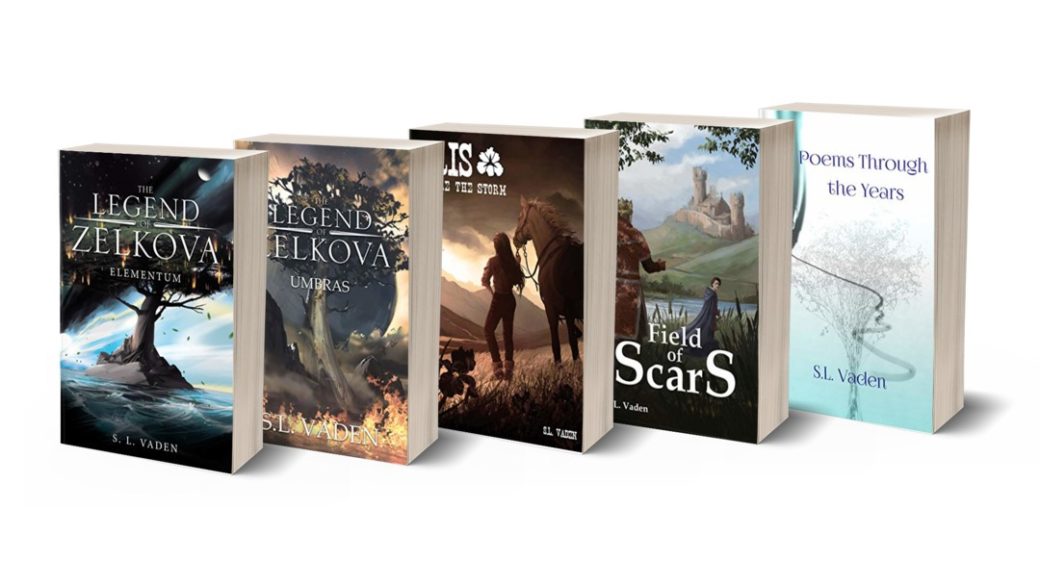
    When I started writing my first book, The Legend of Zelkova: Elementum, I didn’t know what I was doing.

    All I knew was that I was having fun.

    But as time went on and I wrote more books and articles, I began to see what all went into it. It’s more than just words; yes, that is the base of it, but the planning and endless hours of thinking about the plot and characters can make for sleepless nights.

    This is where writing notes and making outlines help. If you have an idea, write it down, no matter where you are, what you’re doing, or what time it is. Because once the idea is lost, it’s gone for good.

    So, keep a notebook handy or an app on your phone. Even if you might think the idea isn’t worth writing down, do it anyway. There’s no telling what other ideas might stem from it.

    Write down the major points of the plot, an idea for the beginning, middle and end. Keep in mind these might change as you write and the story takes form, that’s alright. Sticking too much to an outline can hinder creative flow.

    Once you write those down, make an outline of your characters and how they fit in the story and their connection to other characters. Again, this could change as you write.

    Side note: Never be afraid to write outside of what you have outlined. Let the story flow and your ideas run.

    What message do you have interwoven within your plot?

    Mine tend to be about nature and how to respect it before we lose it forever. Another is to go against racism and sexism. I do this by including many different characters, not giving them the stereotypes, they might label as in the world we live. I want the reader to see the world through my books, which have different cultures and peoples. To see that everyone is unique, and that’s a good thing.

    When describing different characters.

    There was one book I tried to read. But couldn’t get past the first two chapters. Mainly because of how the women in the book were detailed. They described their looks and how their bodies moved, unlike the men in this book, where their personality defined them. I understand this can be part of the character, but keep in mind how readers will see what you write and how they might take it. Always keep your target audience in mind.

    Have I lost you yet?

    With each character, you can make as detailed notes as you want or as little. For my first book, I didn’t know how Carya would look until the end, making me have to go back and add her details. My character’s personalities form more than what they look like. That comes as I write.

    How do I come up with names?

    Everyone has their own way of coming up with names. I research names that fit the personality of my characters. With the Legend of Zelkova, they usually come from nature and different languages. Take Kasai, in my first book, and it’s the Japanese word for fire. Or Jardin, the French word for garden. Why do I do this? Mostly because I want to bring other languages to the mind of the reader. To show that the world we live in is vast and has many languages. I also like to use Latin and many others. Find what fits you and your story, this may take time, but you’ll find it.

    Here comes the fun part (I mean that with all the sarcasm I can muster.), what I call the in-between story. It’s not the main story that moves the plot along. It’s the filler, the side stories. For me, these are the most challenging parts to write because I want to get to the main plot, where the action is. But the side stories are just as important as the main ones.

    I’ve found through experience that the side story can weigh down the book, making it stall out or lag. So, as you write your book, keep in mind there can be too much of the “in-between” story. Just enough to cover the story of the side characters and to keep the story moving along.

    During the writing process, you will hit lulls, and they can be long or short. These can be hard to get through. What helps is finding what inspires you. For me, that’s nature and music. So, I take walks, and hike, go to the park. Find new music to listen to, or relisten to my old favourites. Find what helps you and do that. 

    I’ve read a lot of people asking how many chapters a book should be. If you are looking to be published the traditional way, you want to focus on word count. That’s what the publishing companies ask for. How many words is your book?  

    1. What should my book word count be?

    The following are average word-count ranges by genre.

    General Fiction

    Flash Fiction: 300–1500 words

    Short Story: 1500–30,000 words

    Novellas: 30,000–50,000 words

    Novels: 50,000–110,000 words

    Fiction Genres

    Mainstream Romance: 70,000–100,000 words

    Subgenre Romance: 40,000–100,000 words

    Science Fiction / Fantasy: 90,000–120,000 (and sometimes 150,000) words

    Historical Fiction: 80,000–100,000

    Thrillers / Horror / Mysteries / Crime: 70,000–90,000 words

    Young Adult: 50,000–80,000

    Children’s Books

    Picture Books: 300–800 words

    Early Readers: 200–3500 words

    Chapter Books: 4000–10,000 words

    Middle Grade: 25,000–40,000 words

    Nonfiction

    Standard Nonfiction (Business, Political Science, Psychology, History, etc.): 70,000–80,000 words

    Memoir: 80,000–100,000 words

    Biography: 80,000–200,000 words

    How-to / Self-Help: 40,000–50,000 words

    All of these are average book word count ranges and should not be taken as the definitive word count you must reach in your book. We all know of outliers within each genre that have been published well under, or well over, these word counts.

    With the info above, you can set your word count depending on what genre your book is.

    When to end a chapter.

    This can be hard for many writers, knowing when to end a chapter. And many tend to end it with the word count in mind. Some like to keep each one around 2,000 words or 800. For me, I try to keep in the range of what I just listed. But I also keep the story in mind. I like to end chapters on scene change, a cliffhanger, or a suspenseful scene. This keeps the reading wanting more. Of course, keeping a uniformed look with your chapter length will make your book look cleaner and well put together. But think of what will get the reader to turn to the next chapter. 

    Thinking of more than one book at a time.

    This can happen when you have more than one book in your series. While writing the first one, you need to keep in mind the next one and even the one after that. You have to look into the future of your story and where you want it to go. To make sure they all connect. Many writers write their series all at once, but others like myself write them one at a time, publish them and write the next one. Either way, you have to think about the future. Keep your stories connected.

    How to end your book.

    Depending on how many books are in your series, you may want to end with a cliffhanger, keep the readers wanting to read the next one. Or end it happily and make something happen in the next one. The ending is up to you and where you want your story to end and the next one (if there is a next one) to begin. 

    Editing.

    Oh, the torture of editing. Before you start, there are a few things to keep in mind.

    When you’re rereading or editing your manuscript and want to delete something. Open up a new doc and transfer it there. Don’t get rid of it completely because the idea could be used in another story and might be forgotten if you don’t have a copy of it somewhere.

    Keep more than one copy of your work on two different devices. Never have all your eggs in one basket. If your computer or flash drive breaks, you want another copy of your hard work.

    Back to it, editing can be a challenging process. No matter how many times you read it, there will always be something that is overlooked. This happens because we made the story, and it’s hard to see flaws in what we make, no matter how much we look at it. And this is okay. It happens to even the best of writers, including best sellers.

    If you’re not seeking a publisher or publishing it yourself because you think it’s not good or needs to be edited more. Keep in mind this process can go on forever as long as you draw it out. Editing has to end at some point. Over editing can happen when you think about it too much.

    Get someone you trust or an editor to look over it for you. Two pairs of eyes are better than one. I’m not saying to not edit but don’t over-edit. Keep all this in mind when you spend long hours wanting to scream in frustration. ‘Tis, the life of a writer.

    You may ask, do I need an editor. I would suggest always get someone else to look it over at least once before you look over it one last time before sending it out. I had three different eyes on one book and still missed something. It happens. It’s all apart of being a writer. Don’t get discouraged. You will make it through this phase, just don’t overthink it.

    Do I need beta readers?

    That all depends on you. Finding beta readers can be easy for some, harder for others. They are good to have, but you don’t “have to have” them. I would much rather have an editor. But that’s just me. 

    Now that you’ve got your story going and have stared at your screen, blank or not. You are on your way. One word after the other, ideas flowing and lulls accruing. End the end, making a story, bringing characters to life can be very fulfilling. And most wouldn’t trade it for the world.

    No matter how far you are in your writing, keep going. There will be times where you feel like it’s not worth it, and you should stop. Don’t listen to those voices. Don’t listen to the naysayers. Only you can write the book the way you are writing it.

    Because you are unique, and so is your story. Be proud of what you have done and what you are going to do. Because writing a book is no easy task. It takes lots of hard work, long hours, and dedication. It may look easy on the outside, but it’s one of the hardest things anyone can do. 

    I believe in you and the story you are writing.

    If you have any questions, feel free to comment below or find me on social media. Thanks for reading.

    1. https://thewritelife.com/how-many-words-in-a-novel/
  • My mutant gene.

    My mutant gene.

    Over two years ago I found out that I had a gene mutation (MTHFR C677T 2 copies) after I received a letter in the mail from a lab informing me. It also told me to inform my family because it can run in families and is passed down from parents to child.

    Finding out that I had a mutant gene was interesting and scary.My husband said that I have a mutant power. To which I replied, yeah, I can’t process methionine, super.

    Asking doctors who knew less than I did made me even more concerned.

    I turned to the internet to research medical articles on the subject of MTHFR, 2 – C677T gene mutations.

    I found that in this gene mutation, or more accurately gene variant it is common for people to at least 1 of the C677T gene variants and there are things I can do to help mitigate symptoms.

    “It’s a disorder of methionine metabolism, leading to abnormal accumulation of homocysteine and its metabolites.” In other words, my body can’t process or fully absorb methionine. 

    Methionine is an essential amino acid found in many proteins, including the proteins in foods and those found in your body’s tissues and organs. Although your body can produce the amino acid cysteine on its own, methionine must come from your diet.

    What helps?

    Doctors suggest taking vitamin B6, folic acid (folate), and vitamin B12. These help the absorption of methionine. 4

    Because I have 2 copies of the variant I am only able to process methionine at about half the normal rate and the excess can build up without taking folate to help break it down.

    Having too much build-up within the body could lead to cardiovascular disease, blood clots, heart attack, strokes, and other health conditions.4 (If homocysteine levels are kept at normal. Homocysteine is what the test for in your blood to see if you have the gene.) 

    Because of this, I have developed fibromyalgia and chronic headaches. Not everyone has the same symptoms or develop any or all that are listed below.

    My main symptoms are connected to this mutant gene is as follows:

    Headaches, nerve pain, muscle pain, and stiffness, sensitivity to cold. 

    But with a change of diet, almost all of this has gone away or greatly lessened.

    The first year of finding out that I had this, I gave up red meats, chicken, turkey, and pork. But even with that, I could tell when I ate too much fish, cheese, or egg. My shoulders would hurt, and my headaches sent me to the ER three times.

    After a year of that, I went vegan, lessening my protein intake even more. My body started feeling better, with little to no headaches, muscle pain, and sensitivity to cold.

    Even with doing this, I still have high homocysteine levels. Meaning I need to take more B vitamins than I already am. But if I hadn’t gone vegan and had high levels, I would feel like I used to, in extreme pain.

    Again, not everyone has the same symptoms. But if you do have this gene variant, I suggest limiting your intake of high methionine foods such as beef, lamb, certain cheeses, turkey, chicken, pork, certain fish, soybeans, eggs, and many other foods.1 I know it’s hard to change what you eat, but your future and body are worth it.

    If you think you or someone you know may have this mutant gene, go to your local Cardiologists and talk to them bout MTHFR.

    Please check out all the links below, scroll all the way down to read more info about MTHFR.

    Thanks for reading. And may you have a healthy, happy day.

    Symptoms (taken from link 3)

    Conditions that have been proposed to be associated with MTHFR include:

    • cardiovascular and thromboembolic diseases (specifically blood clots, stroke, embolism, and heart attacks)

    • depression

    • anxiety

    • bipolar disorder

    • schizophrenia

    • colon cancer

    • acute leukemia

    • chronic pain and fatigue

    • nerve pain

    • migraines

    • recurrent miscarriages in women of child-bearing age

    • pregnancies with neural tube defects, like spina bifida and anencephaly

    Signs and Symptoms of Homocystinuria (taken from link 2)

    The symptoms will depend on the type of homocystinuria. Symptoms generally develop during the first years of life. However, some people experience symptoms during adulthood. Symptoms are often vague and difficult to detect. The most common forms of this disorder may involve the following symptoms:

    • dislocation of the lenses in the eyes

    • nearsightedness

    • abnormal blood clots

    • osteoporosis, or weakening of the bones

    • learning disabilities

    • developmental problems

    • chest deformities, such as a protrusion or a caved-in appearance of the breastbone

    • long, spindly arms and legs

    • scoliosis

    Less common variations involve these additional signs and symptoms:

    • megaloblastic anemia, an anemia involving larger-than-normal red blood cells

    • seizures

    • failure to thrive

    • intellectual disabilities

    • movement and gait abnormalities

    1. https://www.myfooddata.com/articles/high-methionine-foods.php

    2. https://www.healthline.com/health/homocystinuria

    3. https://www.healthline.com/health/mthfr-gene

    4. https://www.ahajournals.org/doi/full/10.1161/01.CIR.0000165142.37711.E7

    5. https://blog.agapenutrition.com/mthfr-and-fibromyalgia/

    6. https://www.nature.com/articles/3780275

    7. https://www.cdc.gov/ncbddd/folicacid/mthfr-gene-and-folic-acid.html

    https://www.youtube.com/watch?v=0fAdT2V2w2U